
Your website is live. It's been live for a while, and people can find it on Google — you've checked. So why isn't the phone ringing? For service businesses, a website that exists is fundamentally different from one that converts. The gap between those two things isn't always obvious. And the reasons your service business website isn't getting leads usually aren't about your design — they're about five specific things that send visitors away before they ever reach out.

When someone lands on your homepage for the first time, they're running a quick mental checklist — and it takes about five seconds. "Does this company handle what I need?" "Do they serve my area?" "What do I actually do next?"
If your homepage opens with your company name in large letters, a stock photo, and a vague tagline like "Quality Service You Can Trust" — you've already failed that test. Not because your site looks bad. Because it didn't answer the question fast enough.
Your hero section has one job: make a first-time visitor immediately feel like they're in the right place. That means a specific headline naming what you do and who you serve — not what you stand for. A Houston HVAC company that opens with "Fast AC Repair for Houston Homeowners — Same-Day Service Available" answers all three questions in one line. That's the target.
Your homepage has five seconds to confirm you solve the visitor's problem — specific and clear beats clever and vague every time.

There's a direct relationship between form length and abandonment. Eight fields — name, phone, email, address, service needed, preferred date, how you heard about us, message — feels like a job application. The visitor wanted to ask a quick question. You handed them homework.
For a service business, three fields converts better than eight. Almost every time. Name, phone number or email, and what do you need. That's it.
Trim your contact form to three fields and you'll see more inquiries without changing anything else on the page. Every additional field is another reason to stop and reconsider whether reaching out is worth the effort.
If you need more information to scope the job, get it on the call. The form's only job is to start the conversation — not qualify the lead before you've even spoken.
A contact form with three fields converts more leads than one with eight — every extra field is friction you're choosing to add.
We offer free website reviews for service businesses — no pitch, just a clear look at what's holding it back and what to fix first. Book yours at socialreachco.com.
Service businesses run on trust. The visitor finding you through a Google search doesn't know you — they have no context for whether you're good at what you do. What makes them call you instead of the next result? Proof that someone like them trusted you, and it worked out.
The problem isn't that you don't have reviews or testimonials. It's that they're at the bottom of the page, after the 600-word about section nobody reads on a first visit.
First-time visitors make a trust decision before they scroll. That means your strongest testimonial — or at minimum a visible star rating — needs to appear in the first screen they see.
Social proof above the fold isn't optional for a service business website — it's often the difference between a bounce and a phone call.
Testimonials buried below the scroll convert almost no one — move your strongest proof to the first screen visitors land on.

Every CTA on your site is a micro-decision point. "Contact Us" asks for nothing — it gives no signal of what happens next, no reason to act now, and no sense that reaching out is easy or worthwhile.
Compare that to "Book a Free 15-Minute Call" or "Get a Same-Day Estimate." Those tell the visitor exactly what they're getting and when. That specificity matters more than most people realize.
The wording of your CTA signals how serious you are about helping — and vague asks get vague results.
And beyond the wording: if the only CTA on your page sits at the very bottom, most visitors will never reach it. Put the primary CTA in your hero section. Then repeat it. Don't make someone scroll to find out how to hire you.
Specific CTAs like "Get a Free Estimate" consistently outperform "Contact Us" because they tell the visitor exactly what they're getting.
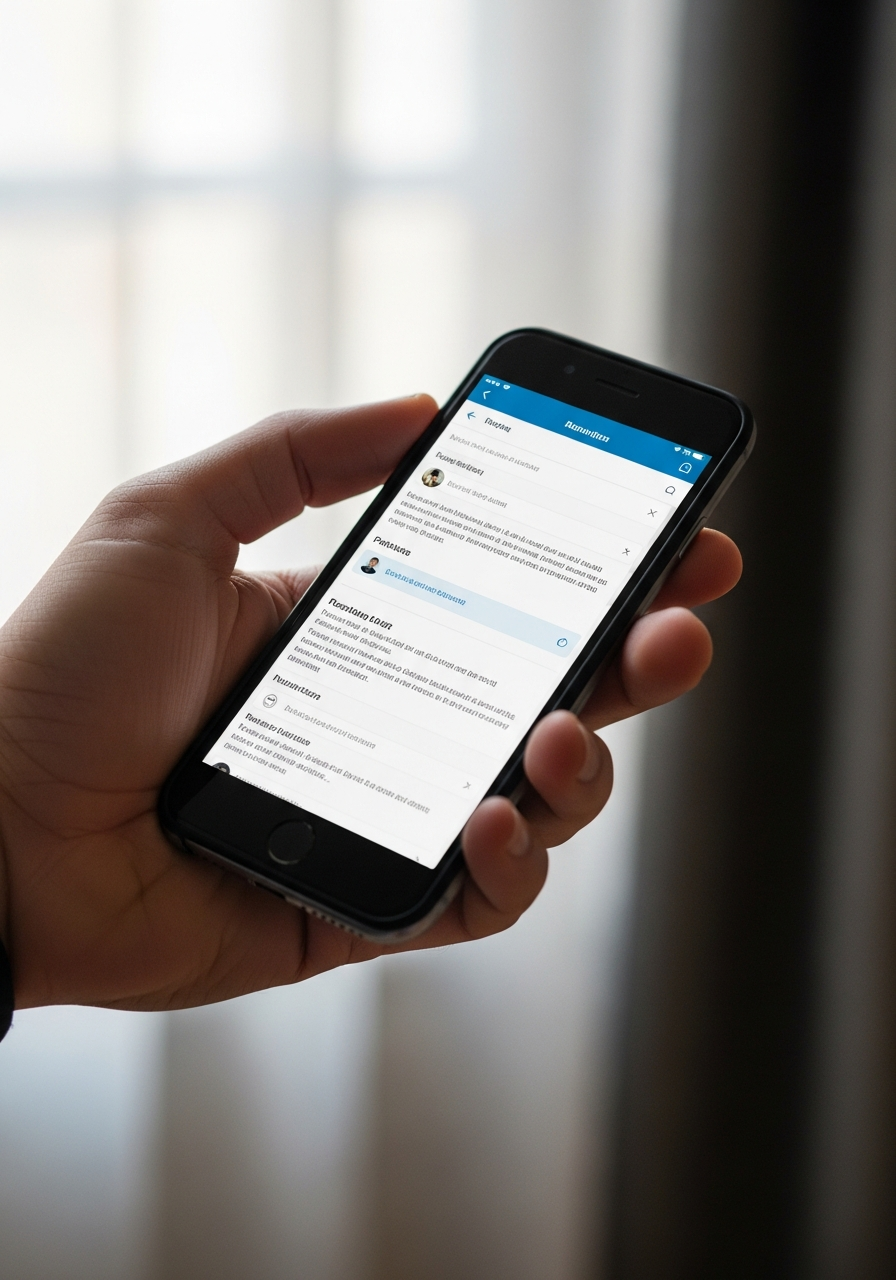
More than 60% of local service searches happen on a phone. If your site was built for desktop and "made responsive" as an afterthought, it's probably technically functional on mobile — but quietly frustrating to actually use.
Menus hard to tap. Text that requires pinching to read. Buttons too small to hit with a thumb. A phone number that isn't click-to-call. These aren't catastrophic failures — they're small friction points that compound into a lost lead.
The visitor on mobile isn't going to tell you the site is hard to navigate. They're going to leave and call the next result whose site isn't.
Test your own site on your phone right now. If anything requires extra effort, it's actively costing you leads.
If your website is frustrating to use on mobile, no amount of advertising spend will make up for the leads quietly walking out the side door.
The fix isn't a full redesign — it's treating your website like a conversion tool instead of a brochure. That starts with three things working together.
First, clarity: your homepage needs to answer what you do, who you serve, and what happens next — before anyone scrolls. Second, visible proof: your strongest testimonial needs to be in the first screen, not buried below three content sections. Third, a specific ask: every page needs one clear CTA that names the action and the outcome.
For a deeper look at what gets in the way, read our guide to common website mistakes that kill conversions and what a conversion-ready website actually looks like. Or if you'd rather have us look at your site directly, we offer professional web design for service businesses — starting with a free review.
If your website is live and the phone isn't ringing, you're not imagining it — and the problem is almost certainly fixable without starting over. Most service business sites are one or two specific changes away from converting the traffic they already have. Social Reach works with service businesses in Houston and beyond to close that gap. Start with a free website review at socialreachco.com.
We offer free website reviews for service businesses — no pitch, just a clear look at what's holding it back and what to fix first. Book yours at socialreachco.com.
Explore strategies and insights for growing your brand
Real results from people who trusted us with their business.
Common questions about content strategy and how Social Reach works
We’re a full-service marketing and design agency that covers both digital and physical touchpoints. That includes websites, SEO, and advertising, as well as printed materials like flyers, signage, and branded merchandise. Our goal is to make sure your business looks professional and consistent everywhere your customers interact with you—online and offline.
We treat your website as the foundation, then build around it with marketing and design. Online, that might mean SEO, content, or ads to drive traffic. Offline, it includes branded materials that support your presence in the real world. When everything is aligned—your website, marketing, and print—it creates a stronger, more trustworthy brand that converts more customers.
It depends on your business, but many local and service-based companies benefit from both. Digital marketing helps people find you, while print materials reinforce your brand in person—whether that’s at events, in your storefront, or through direct outreach. We help you choose the right mix so you’re not overspending, but still making the biggest impact.
In addition to building high-performing websites, we offer SEO, digital advertising, and content strategy to help drive traffic and leads. On the design side, we create everything from logos and brand assets to printed materials like brochures, signs, and merchandise. This allows us to support your business across every stage of growth.
Working with one team keeps everything consistent and strategic. When different vendors handle your website, marketing, and print materials, the messaging and design often become disconnected. We make sure everything—from your website to your flyers—feels cohesive and supports the same goal: building trust and bringing in more customers.
Schedule a call with us to discuss what you need to grow